
Polymer clamp with pull strap
A light, cost-efficent polymer clamp that can be closed by hand, intended to replace common zip ties.
User Pain Point Description
Helen works for a company that produces assemblies of polymer tubes. Instead of using zip ties, she wants to develop a polymer clamp that can be closed by hand. The polymer clamp should allow circumferential sealing and therefore repalace two zip ties, saving assembly time. Minimum material shall be used to keep the product cost low.
AI Interpreted Engineering Challenge
AI summarized the problem and transformed it into a lean engineering challenge: Develop a low-load polymer clamp for manual hand closure, intended to replace common zip ties while providing circumferential sealing to prevent leakage. Design for static mechanical conditions and minimize material usage to reduce cost. Focus on a compact closure and band geometry that distributes clamping pressure evenly around the circumference without requiring tools.
AI Generated Concepts
Based on the interpretated engineering challenge, AI proposed three different concepts - and this within seconds.
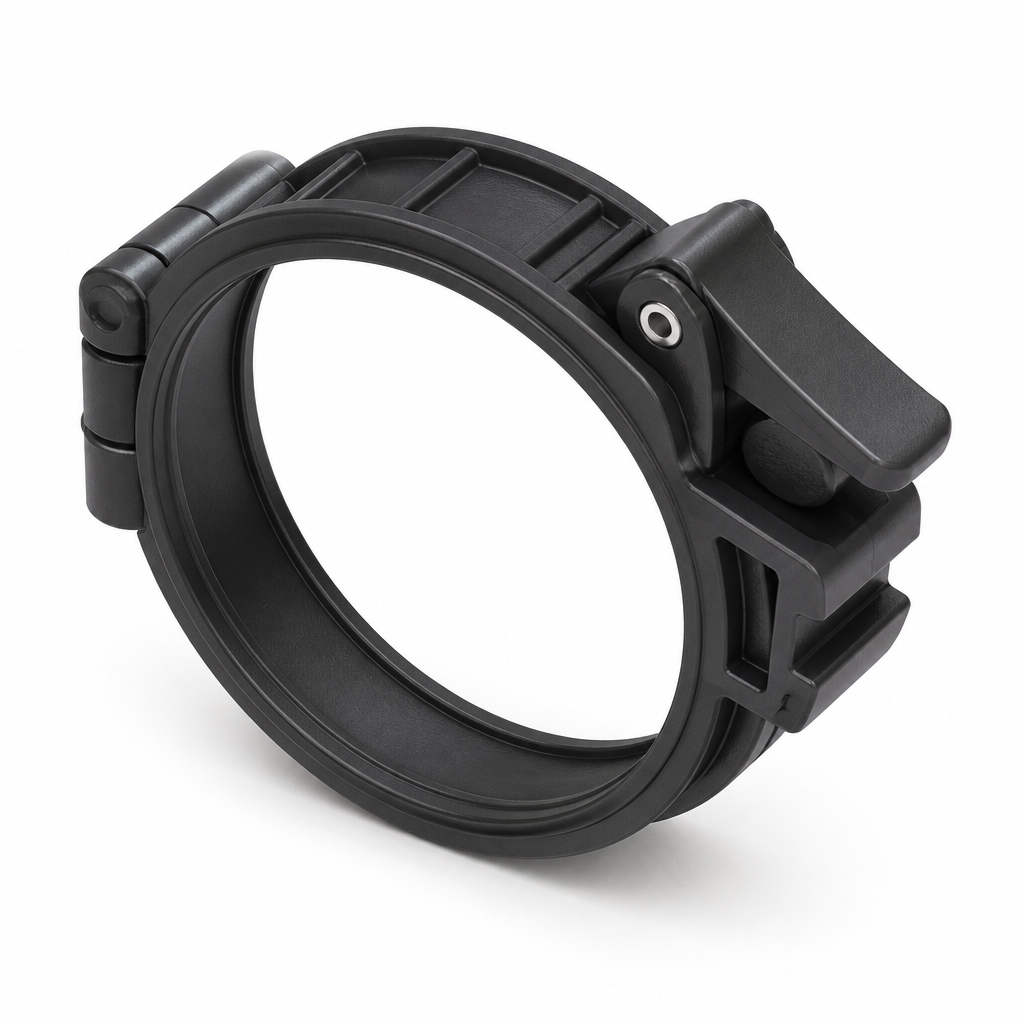
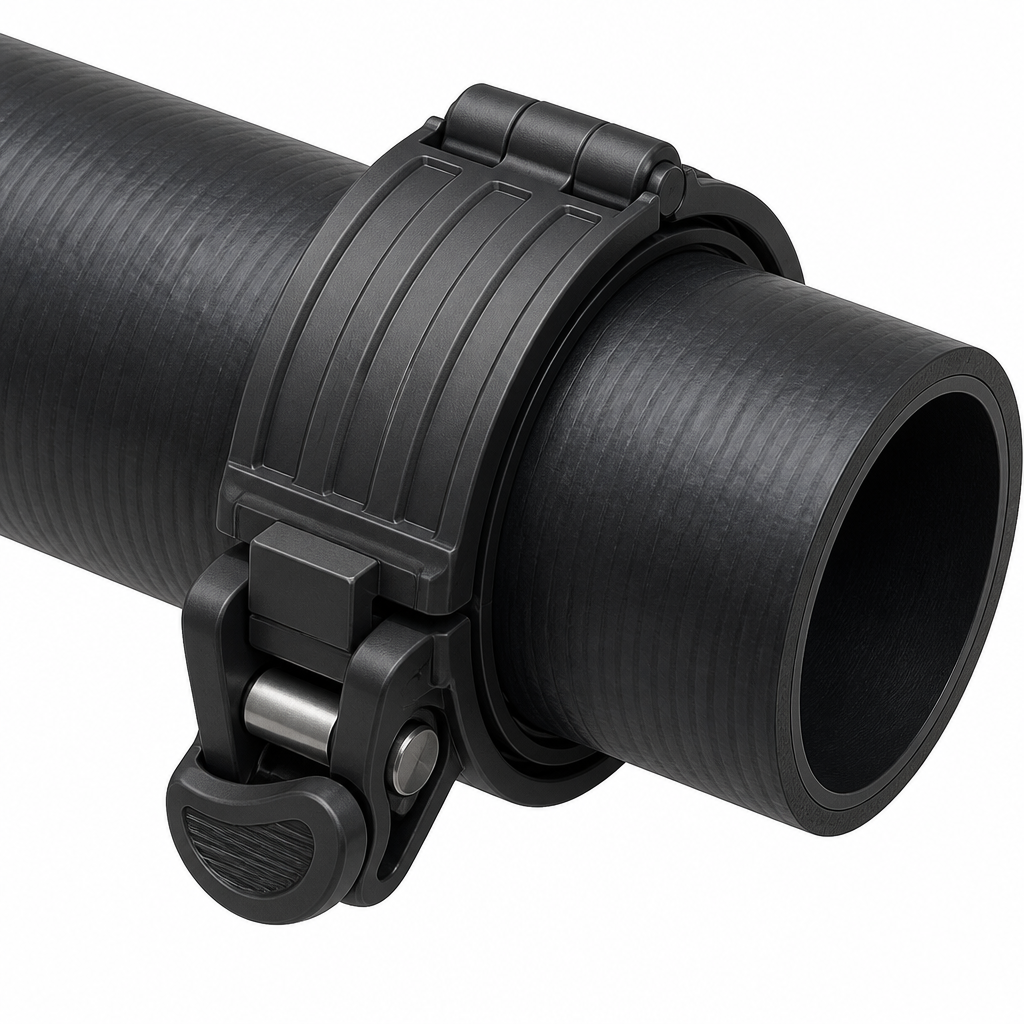
User Selected Concept
Helen reviewed the proposed concepts and decided to go forward with the one idea which best solves the technical pain point.
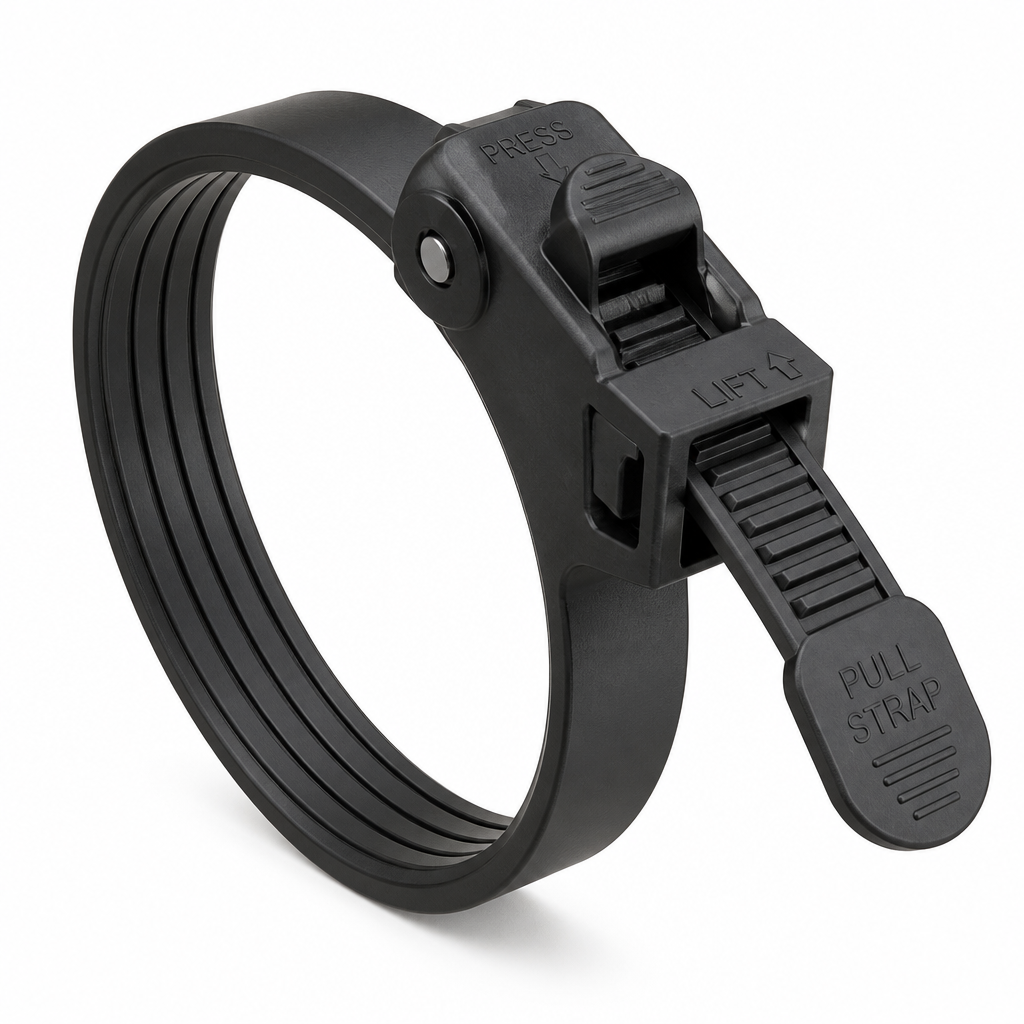
Pull Strap Wedge Collar
A thin polymer collar surrounds the pipe or hose concentrically and includes a broad inner sealing land with three shallow circumferential ribs. One end of the collar is fixed to a compact buckle housing, while the opposite end forms a flexible pull strap that passes through a visible rectangular entry slot in the housing. The strap slides over a smooth internal guide ramp and exits through a narrow wedge channel. Manual pulling tensions the strap around the circumference; pressing a thumb tab drives a flexible pawl downward into molded transverse strap teeth. The buckle housing sits outside the collar and is centered over the overlap region, while the strap remains tangent to the collar before entering the guide. A release tab lifts the pawl through a clearance window. The strap must not intersect the housing walls except through the defined entry slot and wedge channel; contact is permitted only at guide surfaces, pawl teeth, and sealing ribs.
Pros:
- Accommodates several hose diameter tolerances
- Familiar hand-pull tightening action
- Low-profile collar uses little polymer
Cons:
- Tooth engagement can create discrete tension steps
- Strap tail may require trimming or retention
- Not ideal for frequent adjustment cycles
Market potential: high - Resembles familiar cable-tie operation while adding sealing capability for packaging, drainage, agricultural, and appliance uses.
Profit-Margin potential: high - Molded strap and buckle can be produced as one low-material component with limited post-processing.
User Requested Concept Refinement
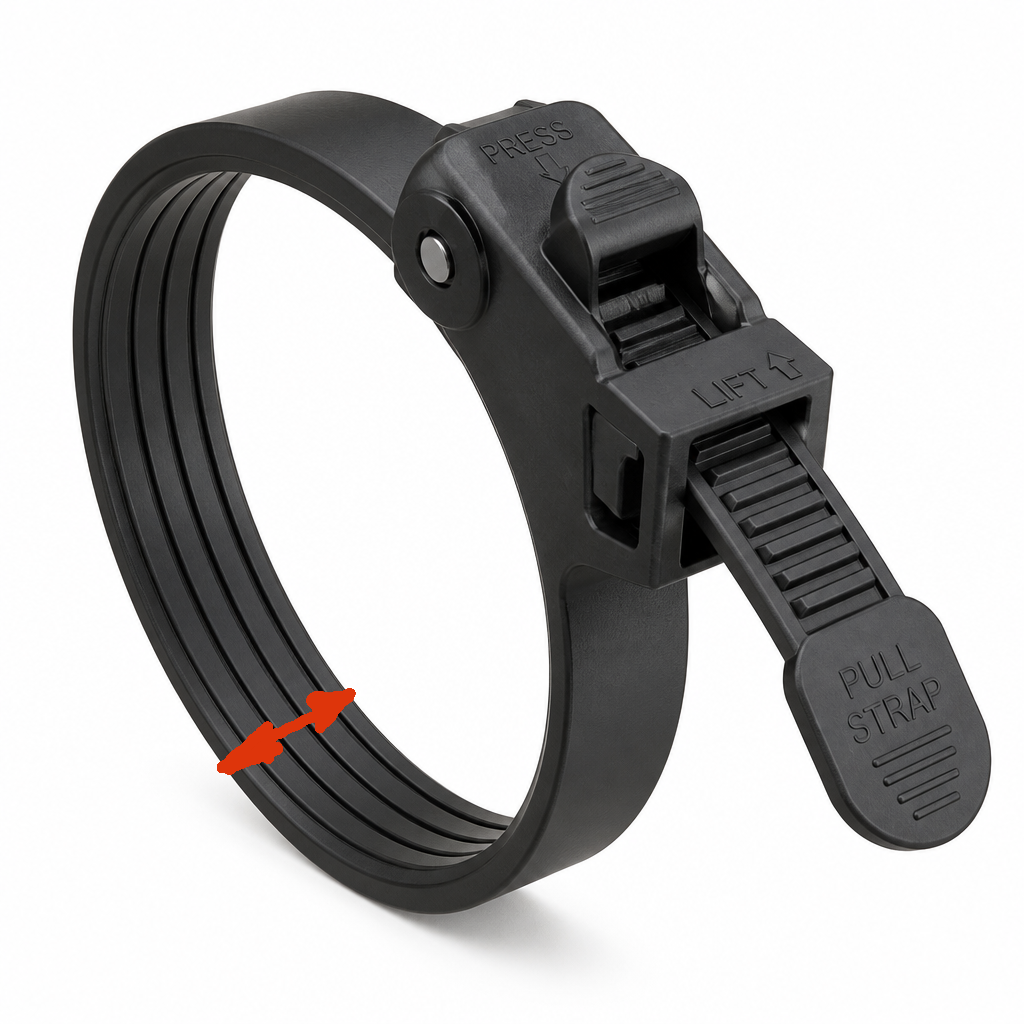
The clamp appeard a bit narrow, hence Helen asked for a refinement: Make the clamp band wider in the direction of the red arrow. Do not change anything else
AI Updated Prototype Geometry
A wider thin polymer collar surrounds the pipe or hose concentrically, extending farther along the pipe direction while retaining the broad inner sealing land and three shallow circumferential ribs. One end of the widened collar is fixed to the compact buckle housing, while the opposite end forms a flexible pull strap passing through the visible rectangular entry slot. The strap slides over the smooth internal guide ramp and exits through the narrow wedge channel. The buckle housing remains outside the collar and centered over the overlap region. Pressing the thumb tab drives the flexible pawl into the transverse strap teeth, and the release tab lifts it through the clearance window. The strap contacts only the guide surfaces, pawl teeth, and sealing ribs.
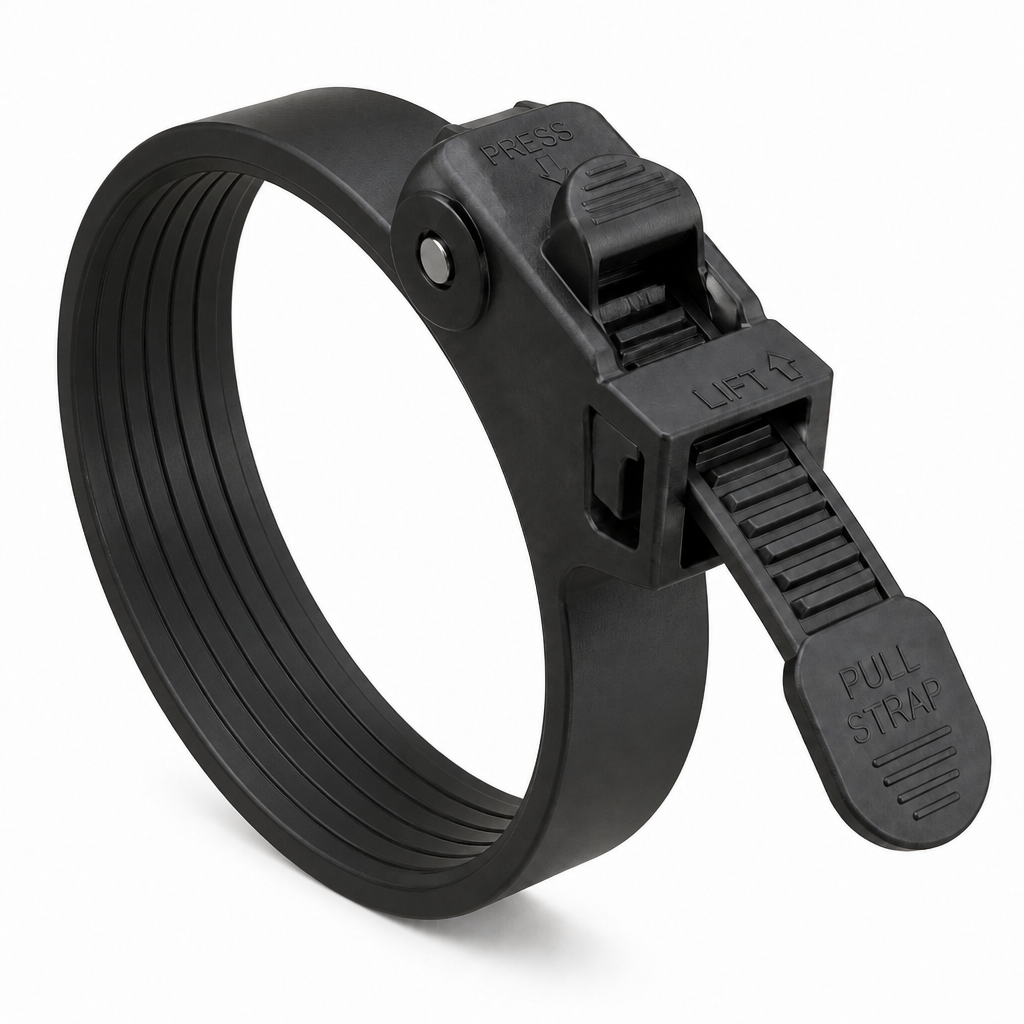
AI Generated 3D-Printable STL
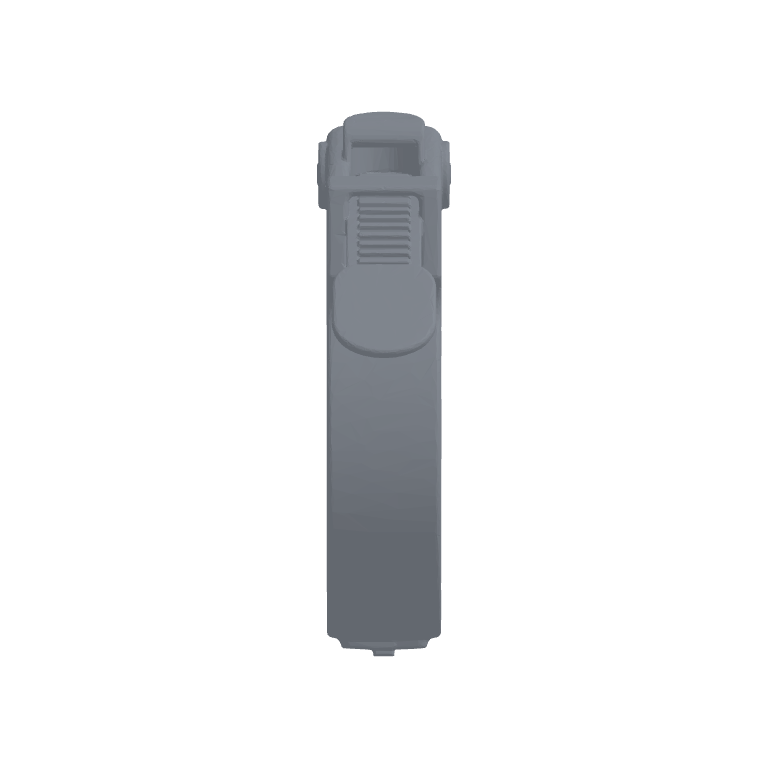
Helen wanted to have a physical prototype in her hands for preliminary discussion with her colleagues. She used AIdeator's STL generation feature to create the solid instantly and subsequently printed it out.
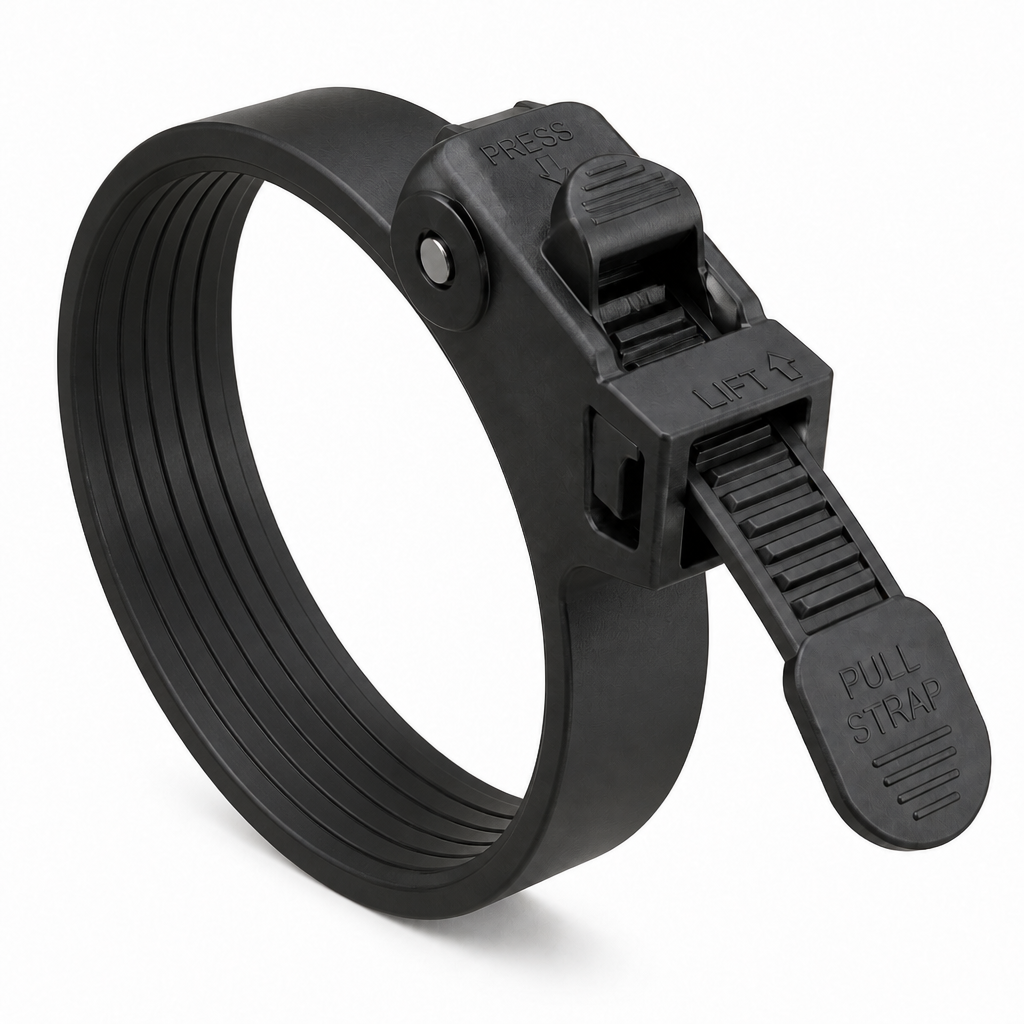
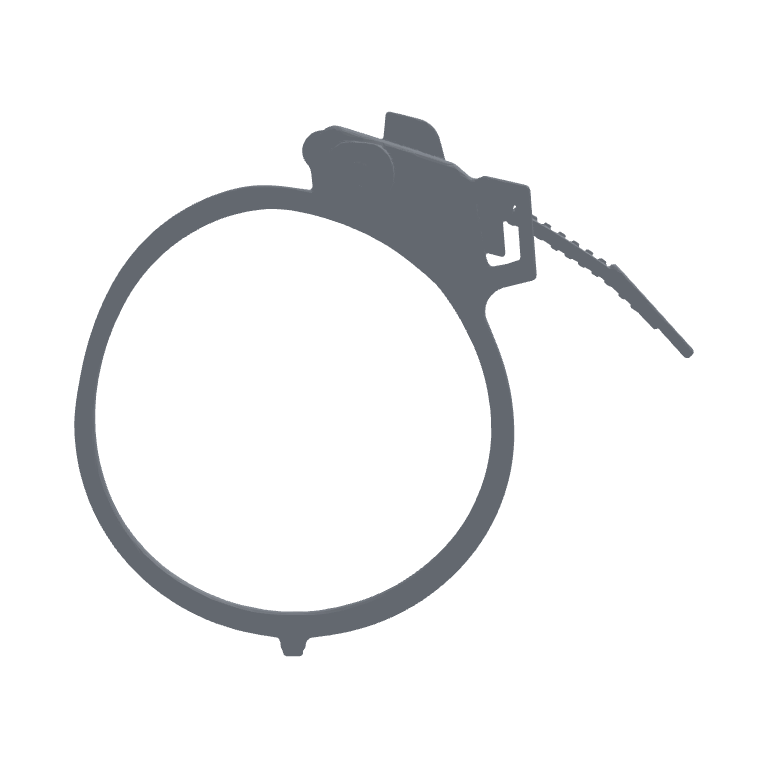
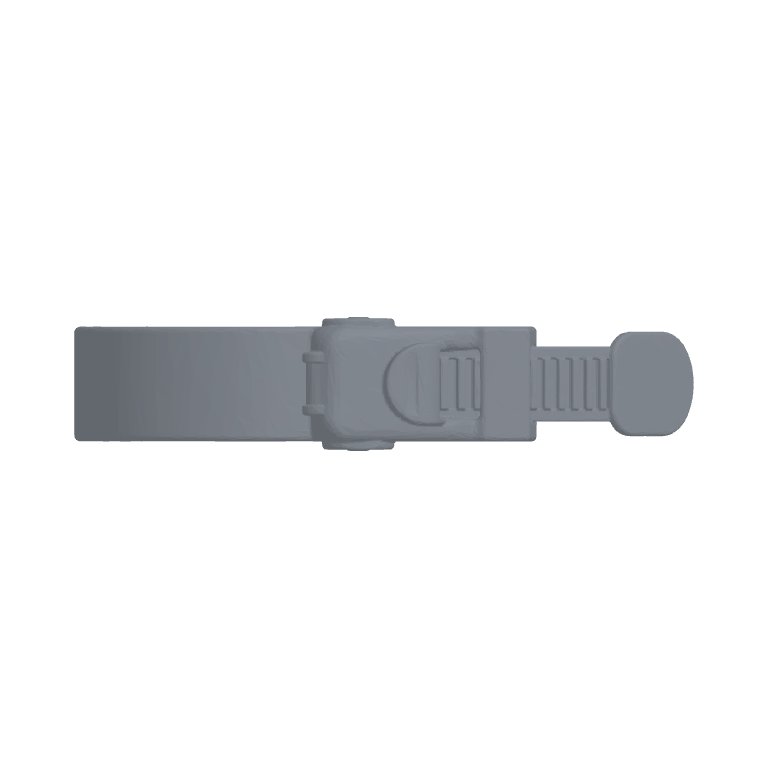
AI Generated OpenSCAD File
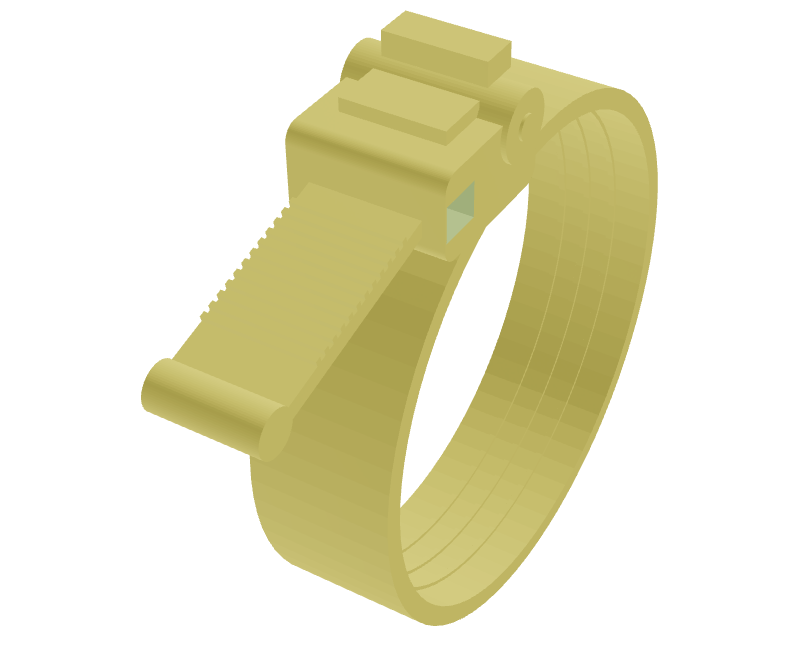
After discussing the concept with her colleagues, she got same inputs she wanted to model directly in CAD. Thus, Helen let AIdeator create a parametric OpenSCAD file automatically.
Engineering Assessment by the User
Helen was impressed by the fast concept generation. She has had no previous experience in clamp design and being given three concept options and then being able to quickly optimize and print them, is a significant advantage.
Try AIdeator with your own engineering problem
Start from a technical pain point and build a concept package for manual review.
Try AIdeator Now Back to AIdeator home